Email Marketing Best Practices for Event Promoters
There's a big difference between sending emails and sending effective ones. Here's how event promoters should design, time, and structure email campaigns that actually sell tickets.

Whether you're just getting started with email marketing or looking to sharpen your strategy, one thing is clear — there's a big difference between sending emails and sending effective ones. Email remains one of the most powerful tools in your marketing arsenal for selling tickets and keeping your fans engaged.
In this guide, we're breaking down everything you need to know — from the types of emails that actually move tickets, to how to design them, to the best times to hit send.
What kinds of emails should you be sending?
Not all emails serve the same purpose. A strong email marketing strategy uses a mix of different email types to keep your audience engaged at every stage — from discovery to day-of. Here are the key types every event marketer should have in their playbook:
1. New subscriber
The moment someone joins your list is the moment they're most interested in you. A welcome email (or short welcome series) introduces your brand, sets expectations for what they'll receive, and points them toward your next event. New subscriber emails consistently see the highest open rates of anything you'll send — use that attention to make a strong first impression and drive an early ticket click.
2. High intent
High-intent emails target fans who have already raised their hand — they clicked a past event link, visited your ticket page, or bought from you before. Because these fans are already warm, these emails can be more direct: a clear event announcement with a strong call to action. Segmenting by past behavior is what turns a generic blast into a message that feels personal, and personal is what converts.
3. Pre event
Pre-event emails build momentum in the weeks and days leading up to a show. Think lineup announcements, artist spotlights, set-time reveals, venue and parking info, and countdown reminders. Each one keeps your event top of mind, gives fans something to share with friends, and creates multiple low-pressure opportunities for undecided buyers to commit.
4. Abandoned cart
A fan who started checkout and didn't finish is your easiest win. Abandoned cart emails automatically follow up with people who left tickets in their cart, reminding them what they were about to buy and making it one click to get back. These are among the highest-converting emails in event marketing — if you only automate one thing, automate this.
5. Newsletter
Not every email should ask for a sale. A regular newsletter — new show announcements, recaps, playlists, behind-the-scenes content — keeps your list engaged between events so your audience doesn't only hear from you when you want something. An engaged list means better deliverability and bigger results when it's time to promote an onsale.

How to design emails that get results
You've got a great event — your email should show that. A well-designed email builds excitement, feels on-brand, and makes it dead simple for fans to take action. Here's what to keep in mind:
1. Lead with an impactful visual
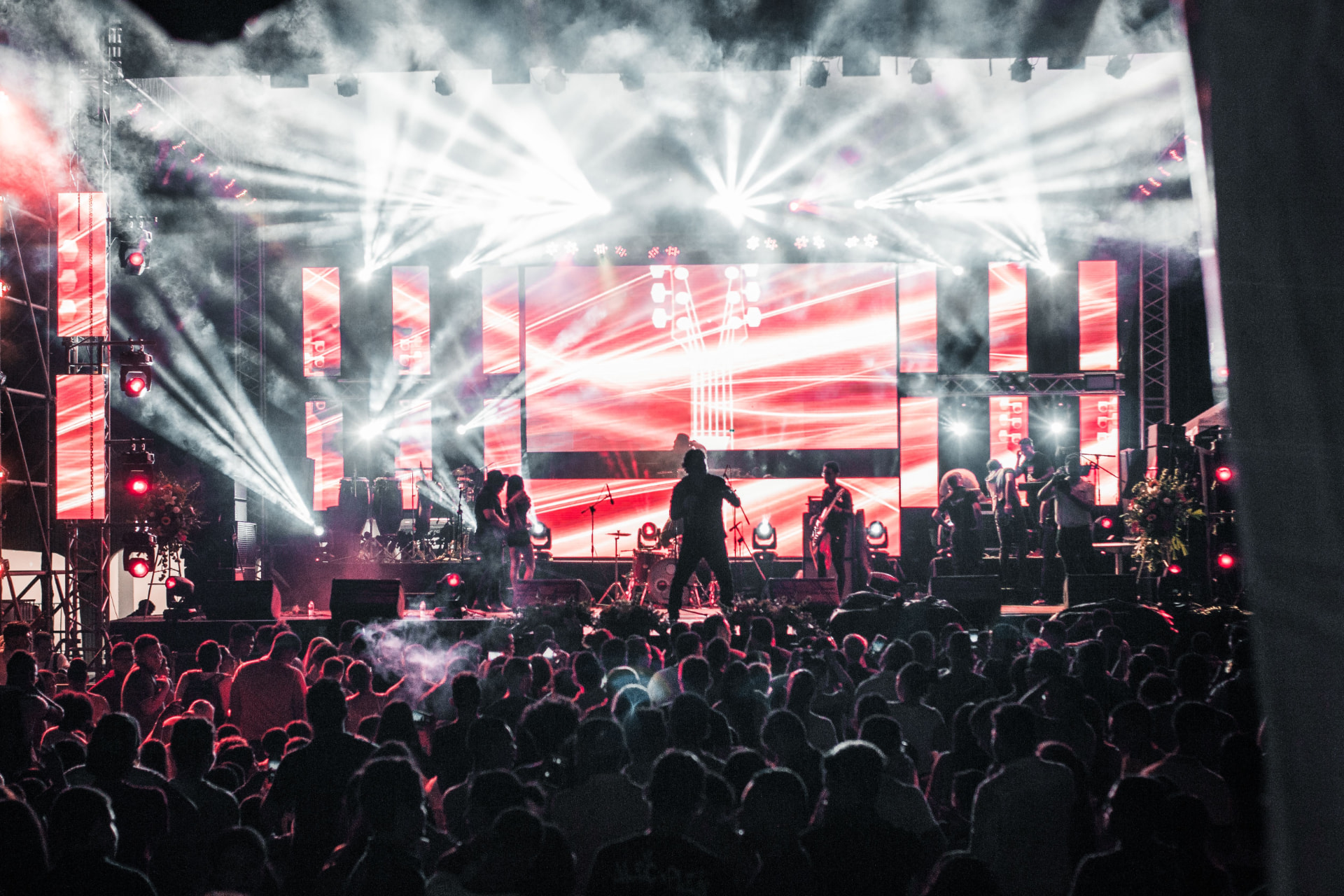
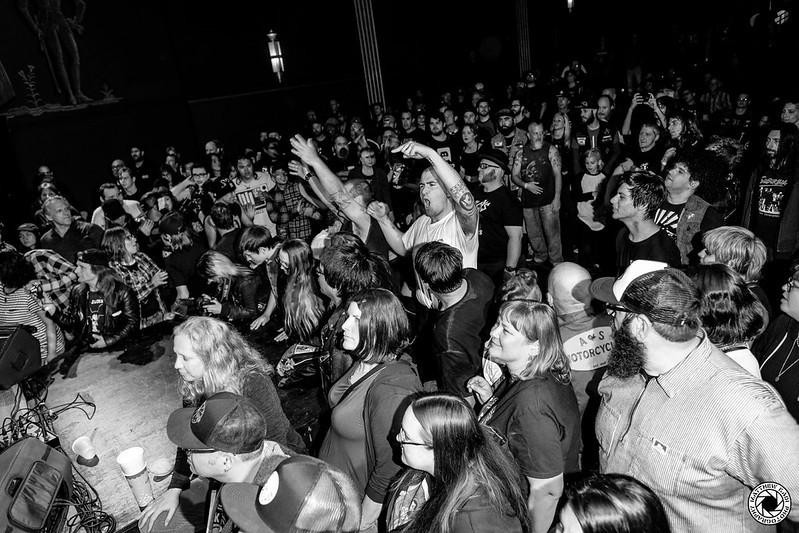
The first thing a fan sees should make them feel the event. A striking artist photo or crowd shot builds excitement before they read a single word — and does more selling than any headline copy. Keep it high quality and specific to the event you're promoting. Authenticity is what gets fans off the fence and onto the ticket page.
2. Keep it short and scannable
Fans are scrolling fast. Your email needs to communicate the essentials quickly — what the event is, why they should care, and how to get tickets. Use short paragraphs, break up text with visuals, and leave the details for your event page. The email's only job is to get the click.
3. Write a subject line that draws curiosity
Your subject line is the gatekeeper — it doesn't matter how great your email looks if nobody opens it. The best subject lines create urgency, tease something exclusive, or tap into FOMO. Avoid generic lines like “Check out our upcoming events.” A little intrigue goes a long way.
First, make sure your emails are landing
Before any of this can work, your emails need to actually land in the inbox. Warm up your domain by starting with your most engaged fans and gradually increasing volume over time. And regularly clean your list — remove subscribers who haven't opened in six months or more. A smaller, engaged list will always outperform a large, unresponsive one.
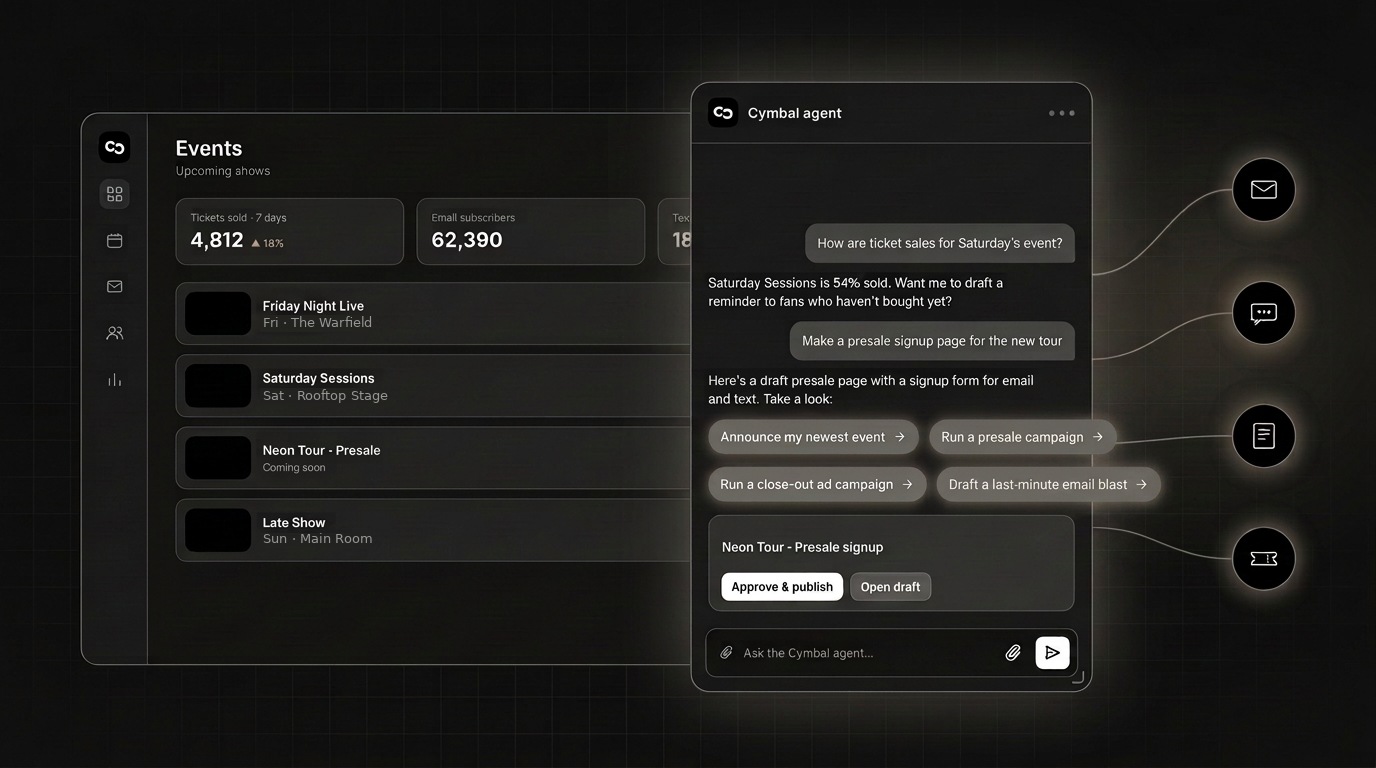
With Cymbal, both of these things are handled automatically so you can focus on your marketing and not your maintenance.
When should you send your emails?
Timing can make or break an email campaign. Send too early and fans forget. Send too late and you've missed the window. Here's what the data says:
1. Best day of the week and time of day
Tuesday through Thursday tend to be the strongest days for email engagement, with mid-morning sends (around 10am) consistently performing well across the industry. That said, your audience is unique — use your analytics to spot patterns in when your fans are most active and let the data guide your schedule over time.
2. Why last-chance emails work
As an event gets closer, the decision to buy becomes more urgent on its own — fans don't want to miss out on something happening in their city. An email sent 48–72 hours before the event, or when tickets are running low, gives that final nudge to anyone who's been on the fence. This is consistently one of the highest-converting emails in any campaign, so don't skip it.
3. Don't go dark before an event
The biggest mistake promoters make is sending one email when tickets go on sale and then going silent. A steady cadence of emails in between — lineup announcements, artist spotlights, venue info, countdown reminders — keeps your event top of mind and gives fans multiple opportunities to share it with friends.
Get more out of your email campaigns with Cymbal
Knowing the best practices is just the start — having the right tools to execute them is what separates good campaigns from great ones. That's where Cymbal comes in.
Automations
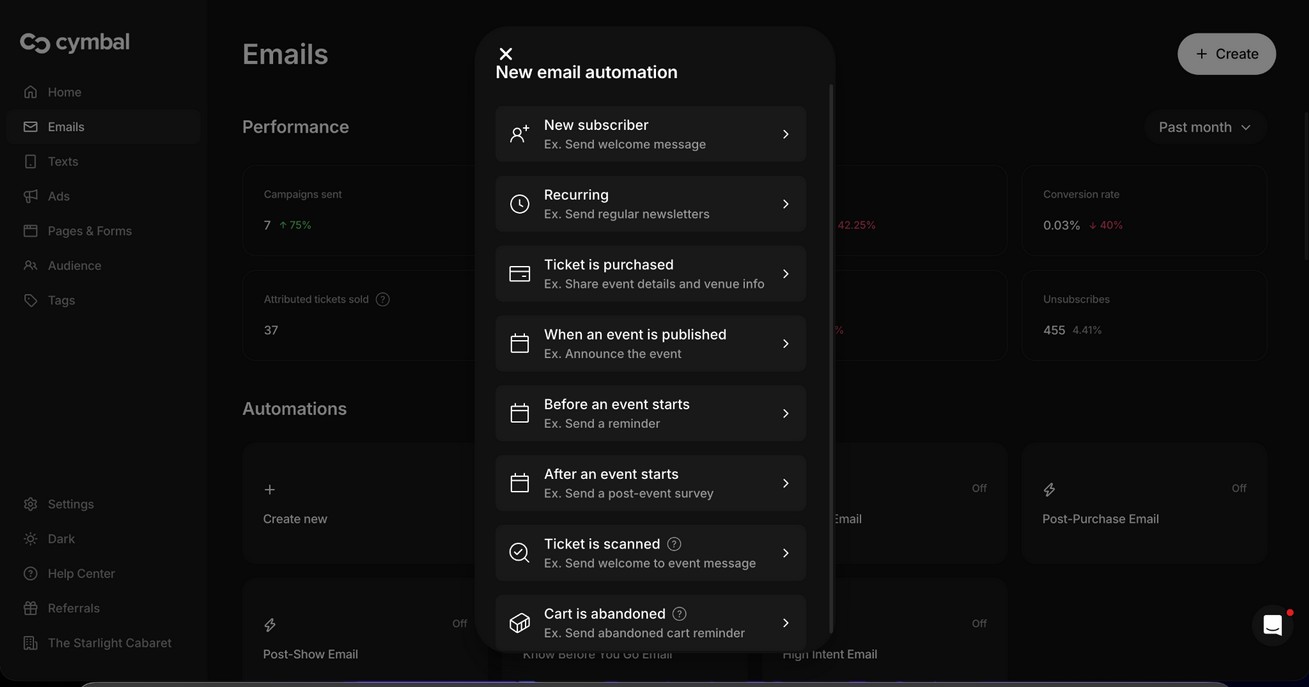
Cymbal automations run your highest-converting emails for you — welcome series, abandoned cart recovery, pre-event reminders, and last-chance sends trigger automatically based on fan behavior, so the right message always lands at the right moment without manual work.
Campaigns
Cymbal campaigns make it easy to design on-brand emails fast, segment your audience by ticket purchase history and engagement, and see exactly which sends drive ticket sales — all connected directly to your ticketing data.
Ready to level up your email game? Get started with Cymbal or book a demo today.
Ready to level up your email game?
Book a demo